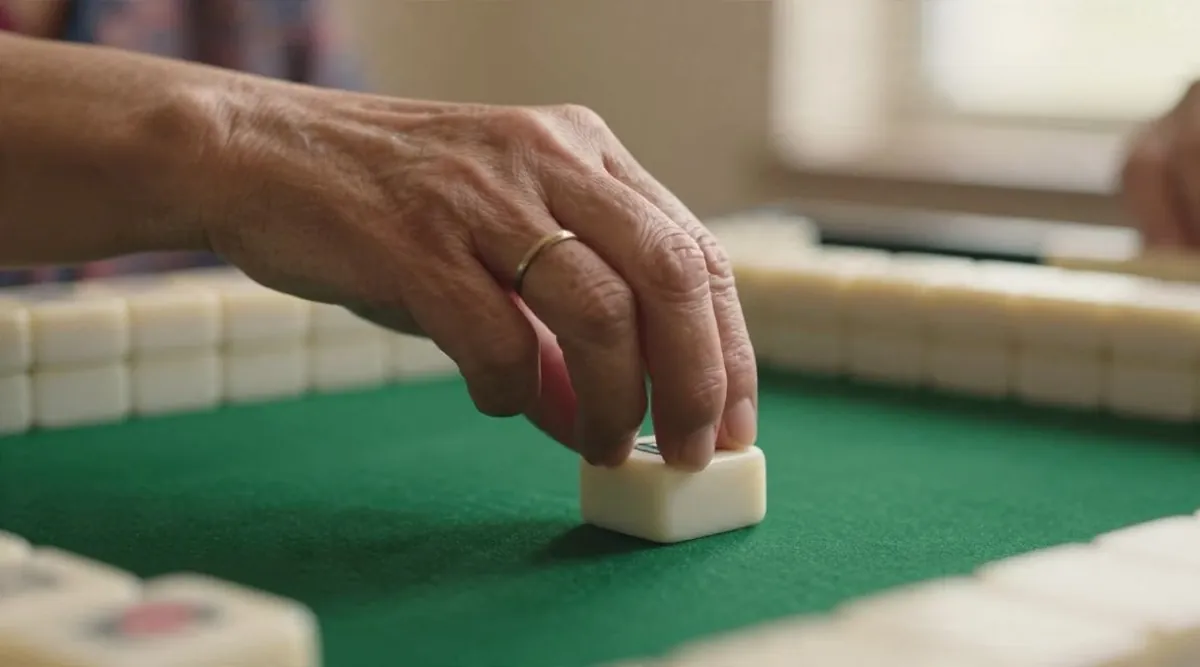
1When you can call a discard
Only for a group of three or more of the same tile, or for the tile that completes your winning hand.
| You want the discard for… | Can you call it? |
|---|---|
| A pung (3 of a kind) | ✓ Yes |
| A kong, quint or sextet (4, 5 or 6 of a kind) | ✓ Yes |
| A pair | ✗ No, unless it is your winning tile |
| A single tile (for example a lone Wind) | ✗ No, unless it is your winning tile |
| A hand marked C (concealed) | ✗ No, unless it is your winning tile |
| A joker someone discarded | ✗ No |
| Mahjong (it completes your hand) | ✓ Yes: say “Mahjong!” |
2How to call, step by step
Speak up before the next player takes their tile, then expose, then discard.
- Say “call” (or “Mahjong!”).Do it as soon as the tile is thrown. Most tables allow a call until the next player has drawn their tile and placed it on the rack.
- Take the tile.Pick it up from the middle of the table.
- Expose the group.Put the called tile together with the matching tiles from your hand face up on top of your rack. Jokers can be part of it.
- Discard.You now have 14 tiles, so throw one tile. You do not draw from the wall on this turn.
- Play moves on from you.The player to your right goes next. Players who were skipped simply lose that turn.

3Two players want the same tile
Mahjong always wins. Otherwise, the player whose turn would come first gets it.
If one player calls for Mahjong and another calls for a pung, Mahjong wins. If two players both call for an exposure, or both for Mahjong, the tile goes to the player who would play next in turn order (to the right of the player who threw it).
4Exposed (X) and concealed (C) hands
X hands may be built with called tiles; C hands must be built from the wall, except the very last tile.
Each hand on the card ends with an X or a C. On an X hand you may call discards for any group of three or more. On a C hand you keep every tile hidden, and only the tile that finishes the hand can come from a discard.
Once you expose a group, everyone can see which hand you are making, and they will stop throwing the tiles you need. Calling is a trade: you finish faster but give away information.
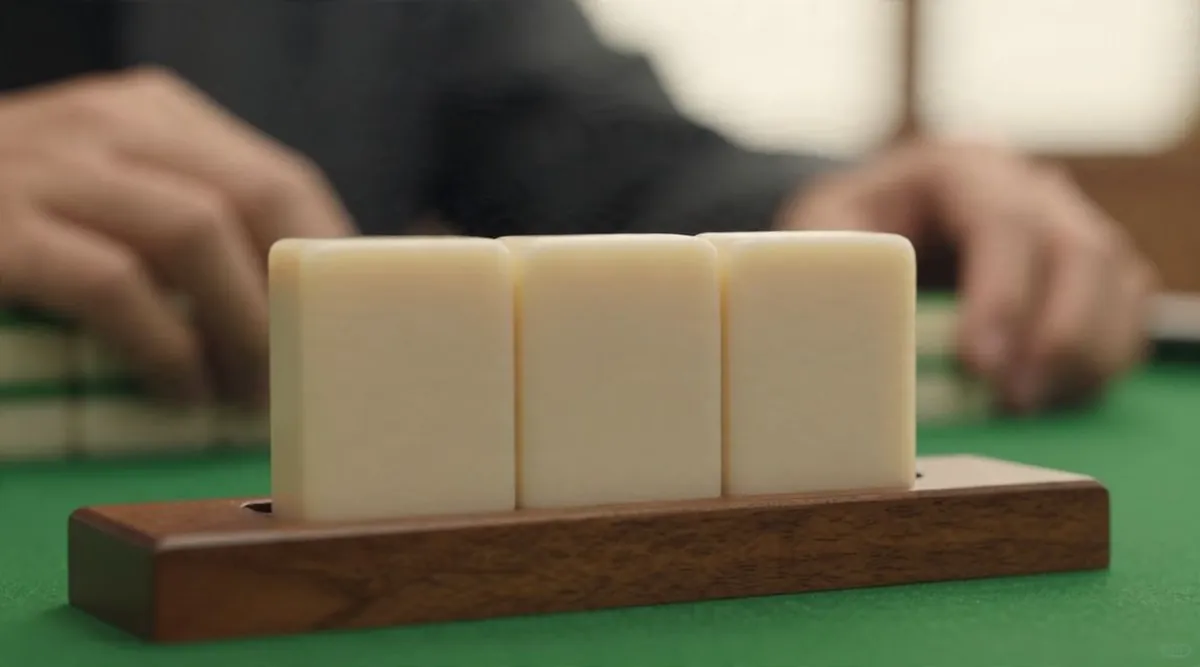
5Exposures and jokers
A joker in an exposure can be swapped out by anyone who holds the real tile, on their own turn.
If you hold a 7 Dot, on your turn you may give it in exchange for one of those jokers. This is called a joker swap or redeeming a joker. It is one of the best ways to get jokers, so think twice before exposing a group with lots of jokers. More in joker rules.
6Calling mistakes
An exposure that fits no hand on the card makes your hand dead.
- Calling too late: once the next player has drawn and racked their tile, the discard is gone.
- Exposing the wrong group: if your exposed tiles cannot fit any hand on the card, your hand is dead and you stop playing (you still pay if someone wins).
- Calling then changing your mind: if you have not exposed anything yet, most tables let you put the tile back. Agree on a house rule for this.
See all the common beginner mistakes.
Questions people ask
Can you call a tile for a pair in American mahjong?
No. You may only call a discard for a group of three or more identical tiles (a pung, kong, quint or sextet), or for the tile that completes your winning hand, even if that tile finishes a pair.
Can you pick up a discarded joker?
No. A joker that has been discarded is dead and cannot be called by anyone.
What is an exposure in mahjong?
An exposure is a group of tiles placed face up on top of your rack after you call a discard. Everyone can see it, and jokers in it can be swapped out by other players.
How long do you have to call a discard?
Until the next player has drawn a tile from the wall and placed it on their rack. After that, the discard can no longer be called.
What happens to the players between you and the discarder?
They lose their turn. After you expose and discard, play continues with the player on your right.
Can you call a tile for a concealed hand?
Only the very last tile that completes the hand, as Mahjong. Every other tile in a concealed (C) hand must come from the wall or the Charleston.