1Every pass, in order
Right, across, left. Then, if everyone agrees: left, across, right. Then the courtesy pass.
| Pass | Direction | Required? | Blind pass allowed? |
|---|---|---|---|
| 1st | Right | Yes | No |
| 2nd | Across | Yes | No |
| 3rd: "first left" | Left | Yes | Yes |
| Vote: anyone can stop here | |||
| 4th: "second left" | Left | Optional | No |
| 5th | Across | Optional | No |
| 6th: "last right" | Right | Optional | Yes |
| Courtesy | Across, 0 to 3 tiles | Optional | No |
2How one pass works
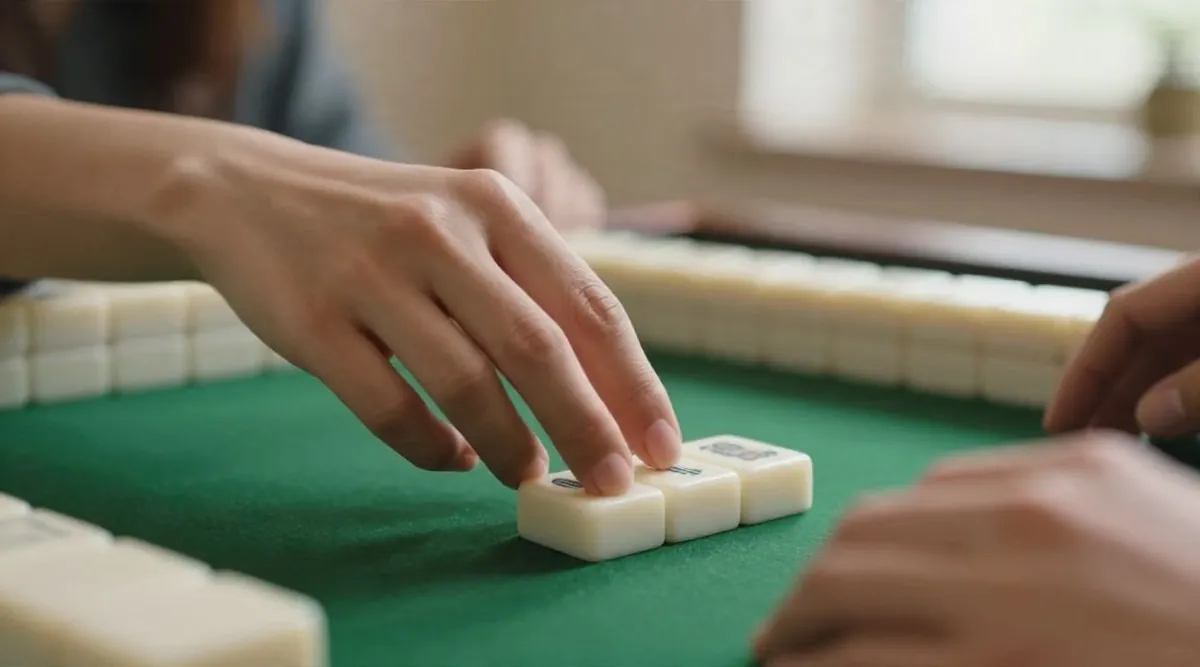
Everyone picks 3 tiles, places them face down, and passes at the same time.
- Choose 3 tiles.Pick the three tiles you want least. Never a joker.
- Place them face down.Put them on the table toward the player you are passing to.
- Pass together.When everyone is ready, slide the tiles over.
- Pick up your new tiles.Take the three tiles passed to you before you choose your next pass.
3The blind pass ("stealing")
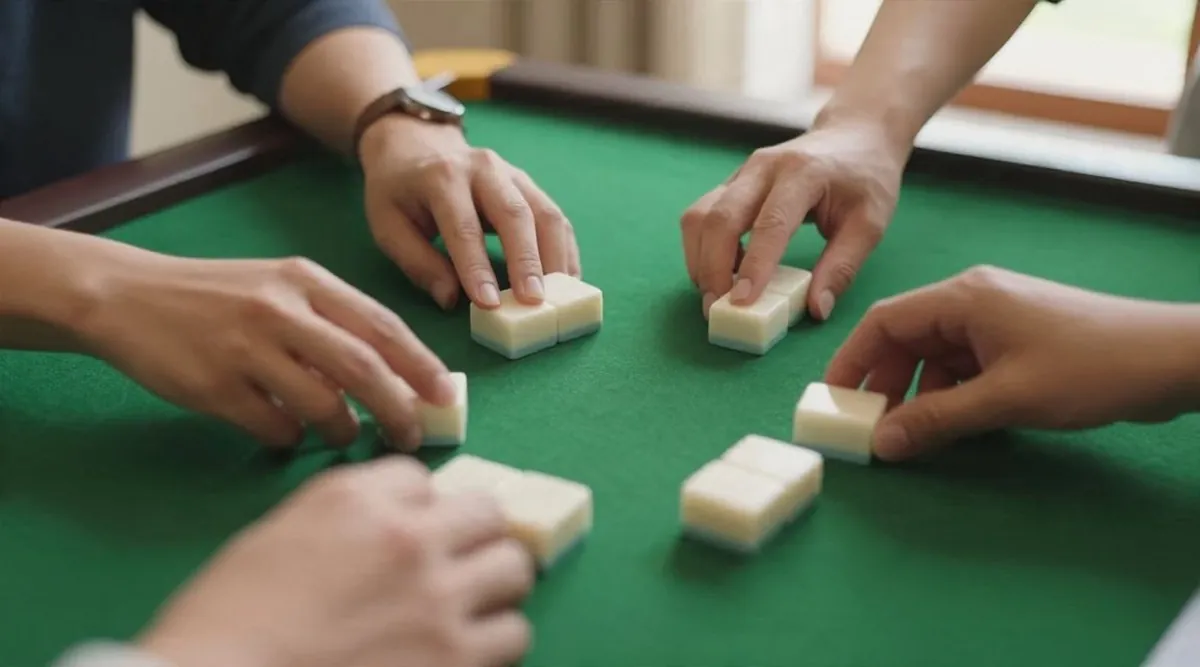
On the first left and the last right, you may pass on tiles you are receiving without looking at them.
Sometimes you have fewer than three tiles you want to give away. On the 3rd pass (first left) and the 6th pass (last right), you may take 1, 2 or all 3 of the tiles coming to you and pass them straight on, without looking. You still pass 3 tiles in total.
4Stopping the second Charleston
The second Charleston only happens if all four players want it. One "no" stops it.
After the first left, the players vote. If anyone says no, skip straight to the courtesy pass. Players often stop it when they already have a good hand and do not want to lose tiles they need.
5The courtesy pass
You and the player across from you may trade 0, 1, 2 or 3 tiles. If you ask for different numbers, the lower number wins.
Say how many tiles you want to trade. If you say 3 and the player across says 1, you both pass 1. If either player says 0, there is no courtesy pass.

6What to pass: strategy
Pass tiles that fit none of your possible hands. Keep pairs, jokers and anything that fits two or more hands.
- Find your two or three best hands.Look at the card before the first pass. Which sections do your tiles fit?
- Pass the loners first.A single Wind or a lonely number that fits none of your hands is the best tile to pass.
- Keep pairs.A pair is hard to get again. Most hands need at least one.
- Do not split groups too early.Wait until the second Charleston before you break up a pair or a pung.
- Watch what comes back.If you keep receiving Dots, someone is passing them away, and Dot hands may be easier for you.
Questions people ask
What is the Charleston in mahjong?
The Charleston is a tile-passing round at the start of each American mahjong game. Players pass 3 tiles right, across and left, may agree to a second round (left, across, right), and can finish with a courtesy pass of up to 3 tiles across.
Is the second Charleston required?
No. The second Charleston only happens if all four players agree. Any one player can stop it.
Can you pass a joker in the Charleston?
No. Jokers can never be passed during any part of the Charleston.
What is a blind pass in the Charleston?
On the first left and the last right, you may pass on some or all of the tiles you are receiving without looking at them. This is also called stealing.
How many tiles do you pass in the courtesy pass?
From 0 to 3 tiles, with the player across. If the two of you ask for different numbers, you both pass the lower number.
Why is it called the Charleston?
The name is usually linked to the Charleston dance, popular in the 1920s when the American game took shape. Like the dance steps, the tiles move right, across and left.